There is something magical about broad beans. From the moment they first explode out of the soil in very early spring, it is obvious how vigorous and full of vitality they are. It is this vigour that makes them one of the very easiest things to grow.
Not only are they one of the first things in the year to crop in the vegetable garden, but they taste great and can be eaten in a huge variety of ways that change as the season goes on and the beans mature — from devouring them whole in their pods when young and tender (ideally drenched in butter), to eating young fully grown beans whole, to popping older ones out of their skins to enjoy the vibrantly emerald-green inner seed, or drying older ones for hearty additions to stews and casseroles, and saving the last of them as seed for next year's crop.
Eating beans is well known to provide a wide range of health benefits, and as well as feeding you, they also feed the soil. All leguminous plants (the bean and pea families) are very special because they have a symbiotic relationship with a strain of nitrogen-fixing bacteria that lives in little lumps (nodules) on their roots, taking nitrogen straight out of the air and putting it into the soil. Nitrogen is of course a primary ingredient in fertilisers, so as well as feeding you, these incredible broad beans also feed the earth.
When to Sow
February is the month to sow broad beans. However, if you want a really early crop, you can actually sow them at the end of the previous season, putting them in the ground in November or early December. In my experience this definitely leads to an earlier crop, though you do always seem to lose some of them. I think probably to mice or other wildlife consuming them. The old timers would tell you to soak them in paraffin to deter this, but I do not really like the sound of that.
So whilst I will sometimes plant them at the end of the year, I only do this if I have got an excess of leftover seeds from the year before. I will plant these in November or December, then fill in any holes and extend the size of the patch in spring with new seeds. The leftover seeds may not always come true to type (they will not necessarily produce exactly the same plant they came from), so I use those for the autumn sowing and buy fresh ones out of the packet in spring that I know will be true to form.
This year, however, I did not do that because I was too greedy. I ate every single last dried bean I had. So this year we are just doing them from seed in spring.
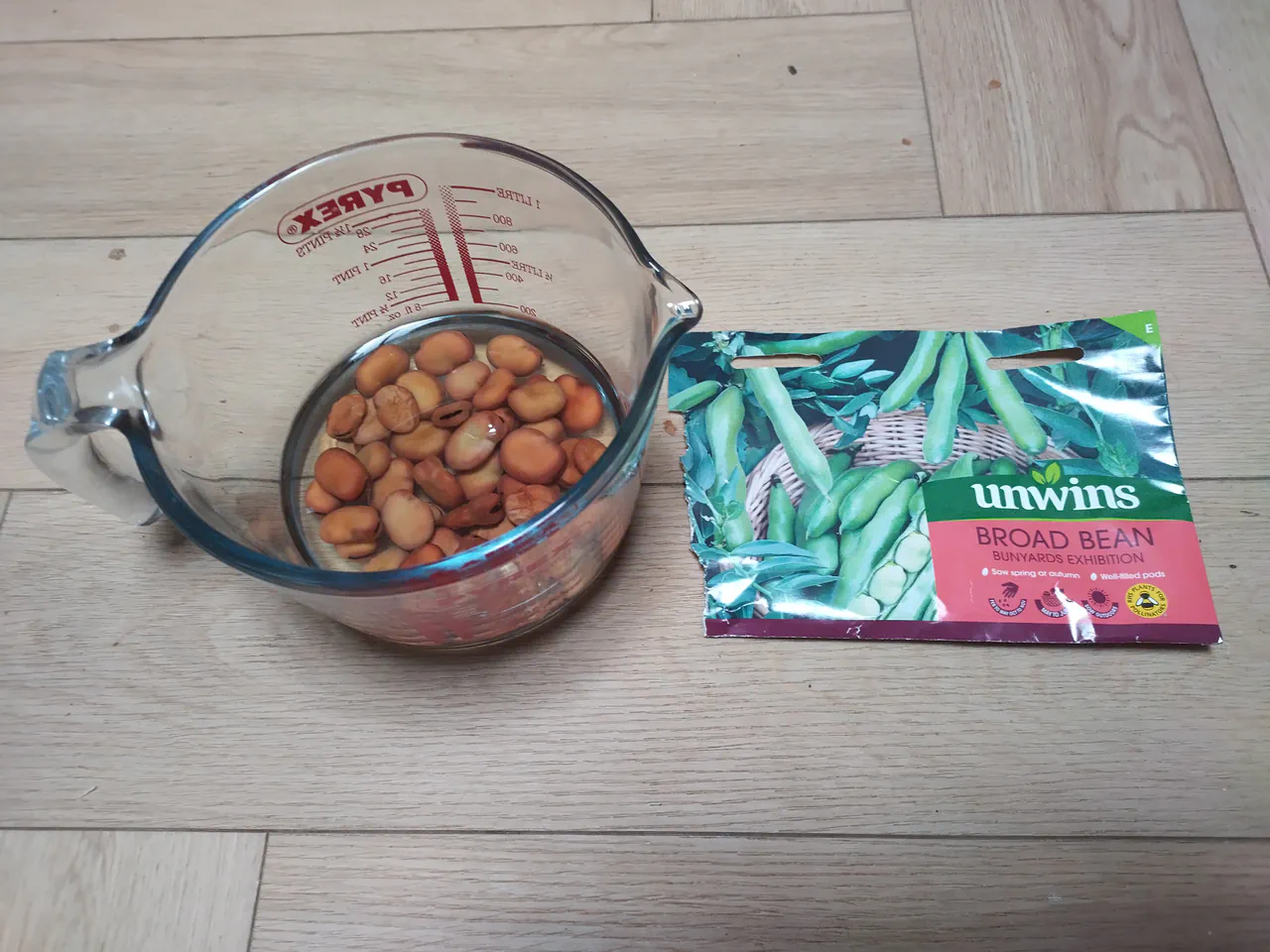
Actually, I am planting later than I normally would. I would ideally have got them in a couple of weeks ago, but life got in the way. So to speed things up slightly, I have had them soaking overnight in a jug of water before planting them out today, which should help speed up germination and probably help me catch up those missing couple of weeks.
Where to Plant
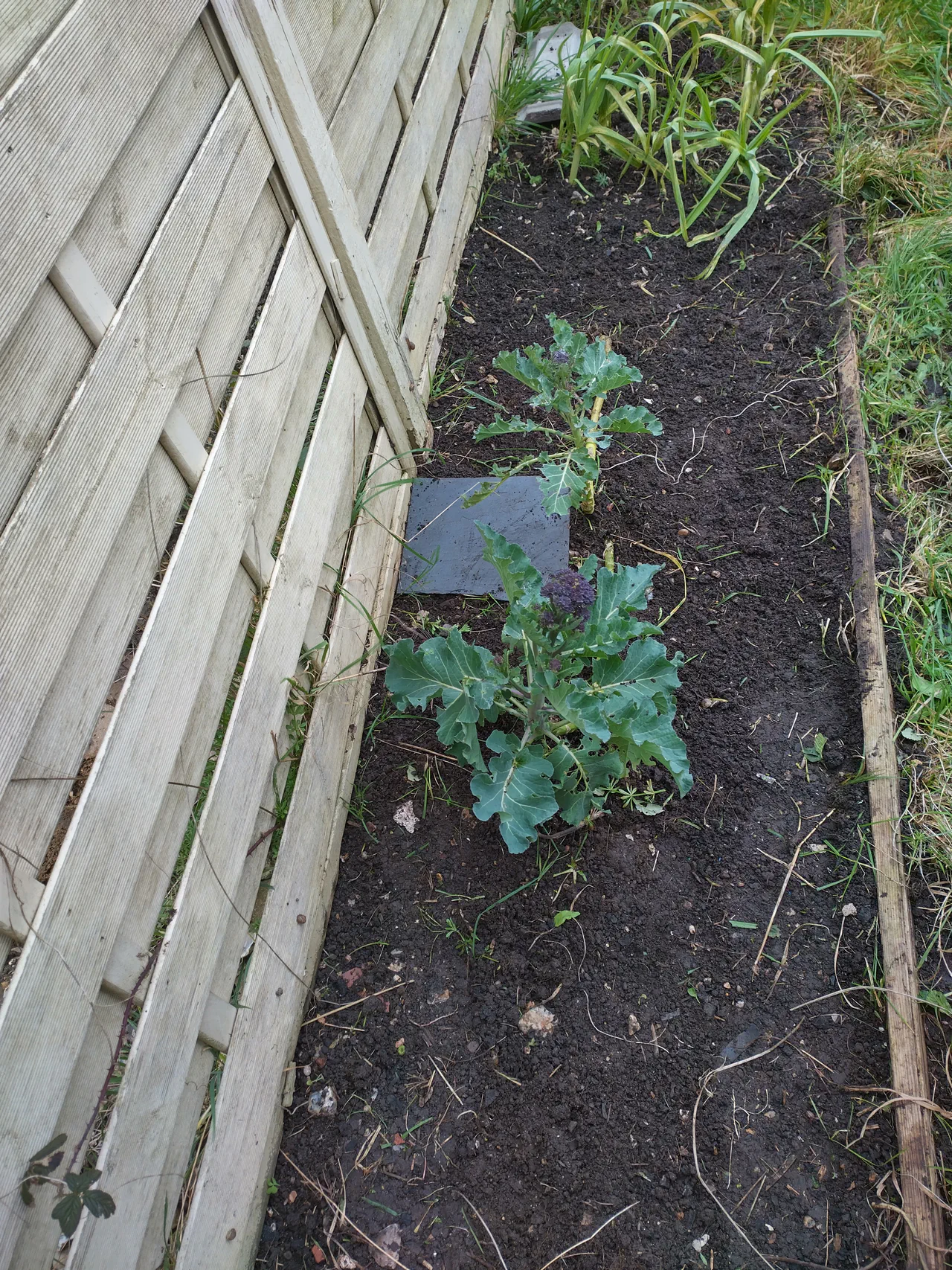
Broad beans grow best in full sun. I am planting mine in a row against the side of a south-facing wall. That said, they will still work in light shade, maybe getting four or five hours of full sunlight a day, though they will not do as well as in a fully sunny spot.
What You'll Need
- A sunny spot: Full sun is best, but they will cope with four or five hours of direct light
- Seeds: Bunyard's Exhibition broad beans (a heritage variety with excellent flavour)
- Soil or compost: Any reasonable, well-drained soil. They are not fussy
- Support: Canes and string for when they get tall (from about 30cm onwards)
- A dibber or trowel: For making 5cm-deep holes
- A jug of water: For soaking seeds overnight before sowing (optional but speeds things up)
Sowing, February 2026
I put in three rows of 12 seeds today, so 36 in the ground in total. The rows are about 30cm apart with roughly 15cm between each seed — a little tighter than the textbook 20–23cm spacing, but broad beans are sociable plants and they will hold each other up once they get going.
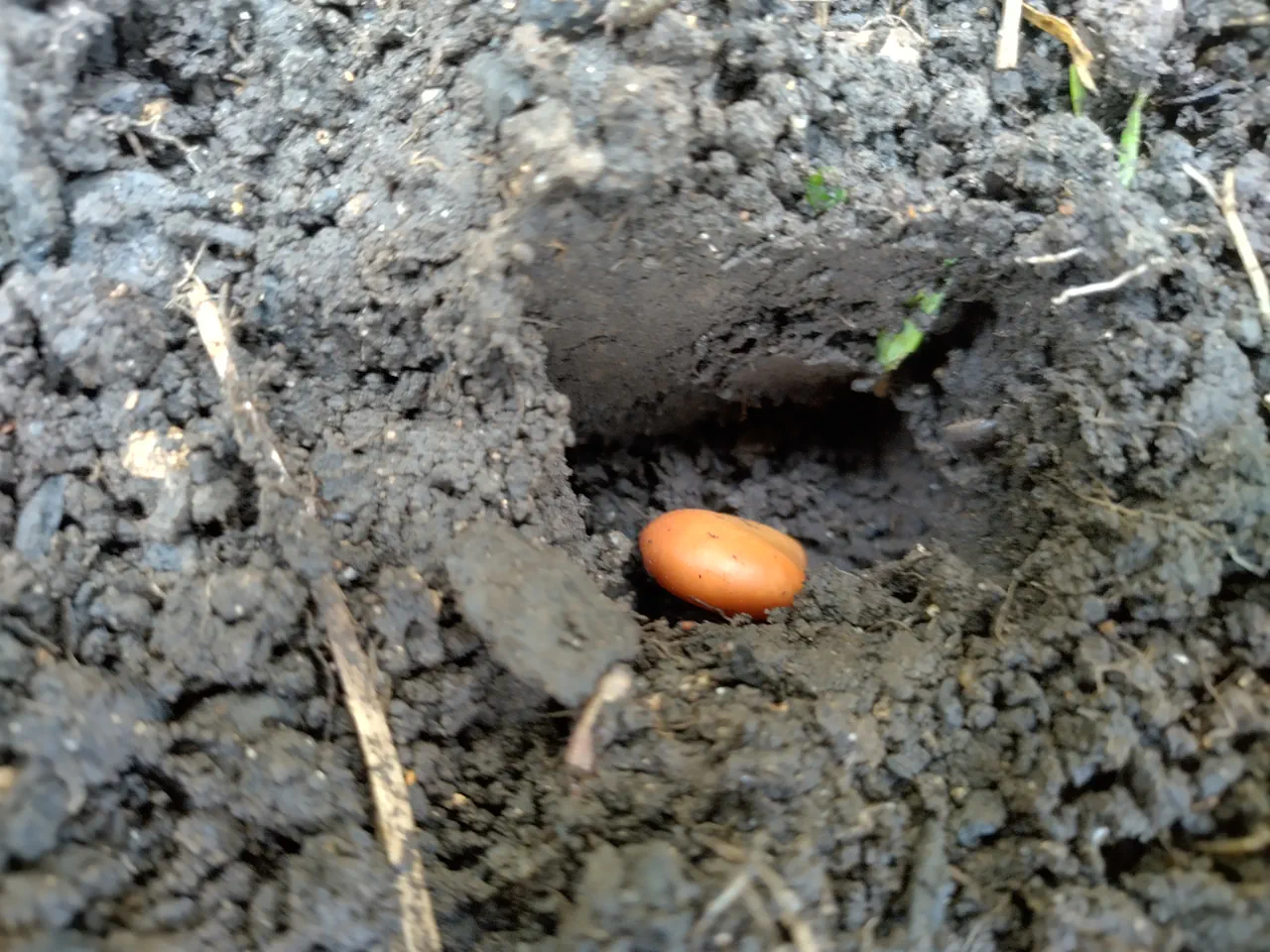
The method is simple. I used a dibber to make holes about 5cm deep, dropped a seed into each one, and covered them over. They had been soaking overnight in a jug of water (you can see them in the photo above, already visibly swollen), which should give germination a head start and help me catch up after planting a couple of weeks later than I would have liked.
The Orientation Experiment
There is a perennial debate among growers about which way up to plant a broad bean seed. Eye (the dark scar where the seed was attached to the pod) facing up? Down? On its side? Plenty of opinions online, not much actual data. So we are testing it.
Each of the three rows has a different orientation pattern:
- Row 1 — mixed: Repeating pattern of eye up, on its side, eye down, repeated four times across the 12 seeds. This gives us four seeds in each orientation within a single row.
- Row 2 — all on their side (control): All 12 seeds laid on their sides. This is the lazy gardener's approach — just drop them in and do not think about it — and serves as our control group.
- Row 3 — split: The left six seeds planted eye up, the right six eye down. No particular scientific reason for this one — just because.
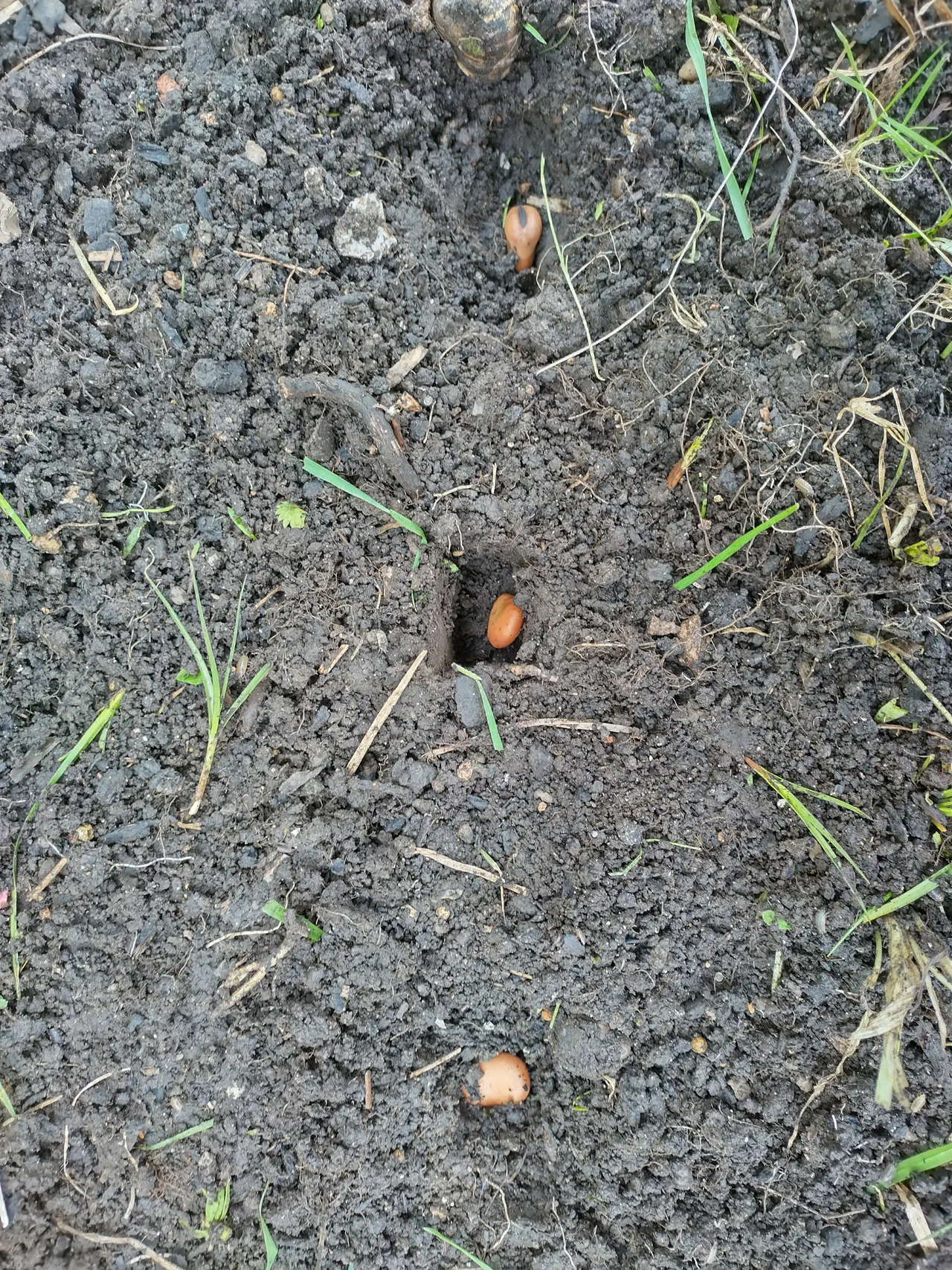
That gives us a decent spread: 36 seeds across three orientations, all sown on the same day, in the same soil, with the same preparation. Not a peer-reviewed trial, but far more data than most of the forum posts arguing about this. We will track germination rates and timing as the seeds come up and report back here.
Results update: March 2026. Germination rates and timing for each orientation will be added here with a full comparison table once all seeds have emerged.
The Hydro Comparison
Alongside the main soil planting, eight beans have gone into the gravel grow hydroponic system — four each in two fabric buckets filled with expanded clay pebbles. I pulled out the dried remains of a purple sprouting broccoli that had finished cropping and planted the beans straight into the same spots. Broad beans in hydroponics is not something you see much information about, so this should be interesting.
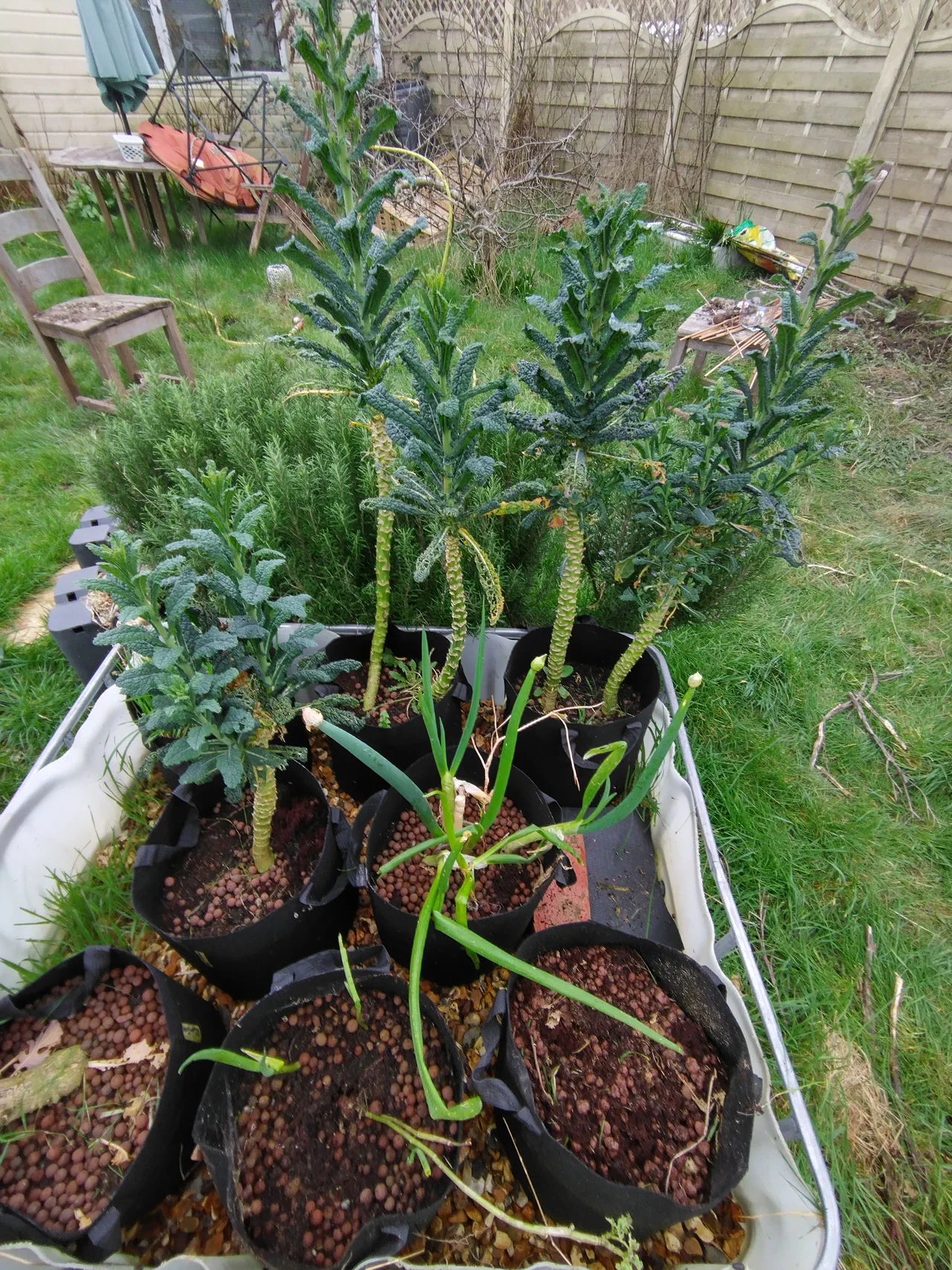
Updates will be added here as both plantings develop side by side. It will be interesting to see whether the nitrogen-fixing root nodules develop in an inert medium the same way they do in soil.
Dealing with Blackfly
In terms of pests, broad beans are pretty resilient, with one exception: they always, and I mean always, get infested with blackfly. This is not actually a problem. In fact, it is a pretty good sign that it is time to pinch out the growing tips, which helps redirect the plant's energy into the pods and results in a better yield. It is the growing tips that the blackfly particularly loves, so when it starts to really take hold, I pinch them out and then just wash off any remaining fly with a hose set to a fine mist, spraying all the leaves without causing any damage. This does not get rid of all of them, but it culls the population right down and then we can leave their natural predators to take care of the rest.
I much prefer this to using any kind of chemical treatment, which can have all sorts of unintended consequences, killing beneficial insects along with the pests. Washing them off as best you can and leaving a few on so that the predators who feed on them can clean up and grow their own population is the way to go.
Frequently Asked Questions
When should you sow broad beans in the UK?
You have two windows: autumn (October–November) for overwintering varieties, or late winter to early spring (February–March) for a summer harvest. February sowing is the most common approach and works well across most of the UK. See the sowing section for the full method.
How long do broad beans take from sowing to harvest?
Roughly 12–16 weeks from a February sowing to full-sized beans, depending on the weather. But you do not have to wait that long. You can eat the pods whole as soon as they form. Do not be put off by the fuzzy texture: once you blanch them in boiling water they are tender, buttery smooth, and absolutely delicious.
Once the beans start to fatten up inside the pods, the pods get too tough for eating whole. At that point, wait until the beans swell and start shelling them out. Once they reach full size, they can be tastiest if you take the skin off each bean. It is time-consuming but yields a delicious and vibrantly green inner seed.
Do broad beans really fix nitrogen in the soil?
Yes. Like all legumes, broad beans form a symbiosis with Rhizobium bacteria in their root nodules, converting atmospheric nitrogen into plant-available forms. When you cut the plants down after harvest (rather than pulling them up), those roots release nitrogen for whatever you plant next. It is free fertiliser, and one of the reasons beans are such a brilliant crop to include in any rotation.
Do broad beans need full sun?
Full sun is best and will give you the strongest plants and heaviest crop. That said, they will still produce in light shade with four or five hours of direct sunlight a day, just not quite as vigorously. A south-facing wall or fence is ideal. See where to plant for more detail.
Should you pinch out the tips of broad beans?
Yes. Once the lower flower trusses have set pods, pinch out the growing tips. This redirects the plant's energy into filling the pods rather than growing taller, and removes the soft tips that blackfly love. The pinched tips are edible too. Wilt them like spinach. See the blackfly section for more detail.
Grew this? Cook this
Related Content
All Growing Guides
Browse all guides by method, difficulty, and season
Babbington Leeks: Plant Once, Harvest Forever
Another easy, rewarding crop. Perennial leeks that come back every year
DIY Gutter Grow Hydroponic Tomato Wall
The passive hydroponic system. See how it compares to soil growing
NFT Hydroponic Herb & Salad Wall
Herbs and salad leaves from a shed wall. A complementary crop to beans