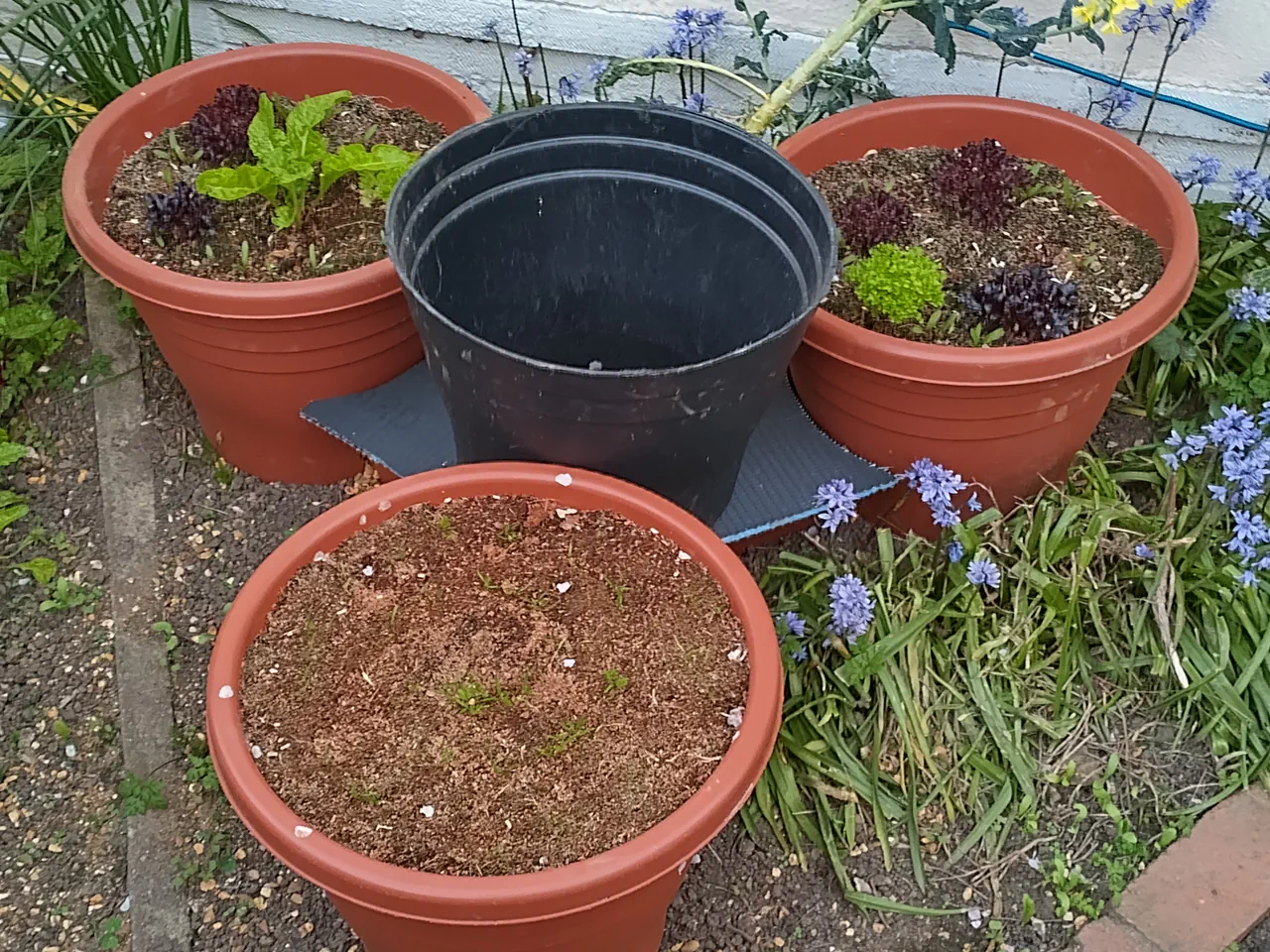
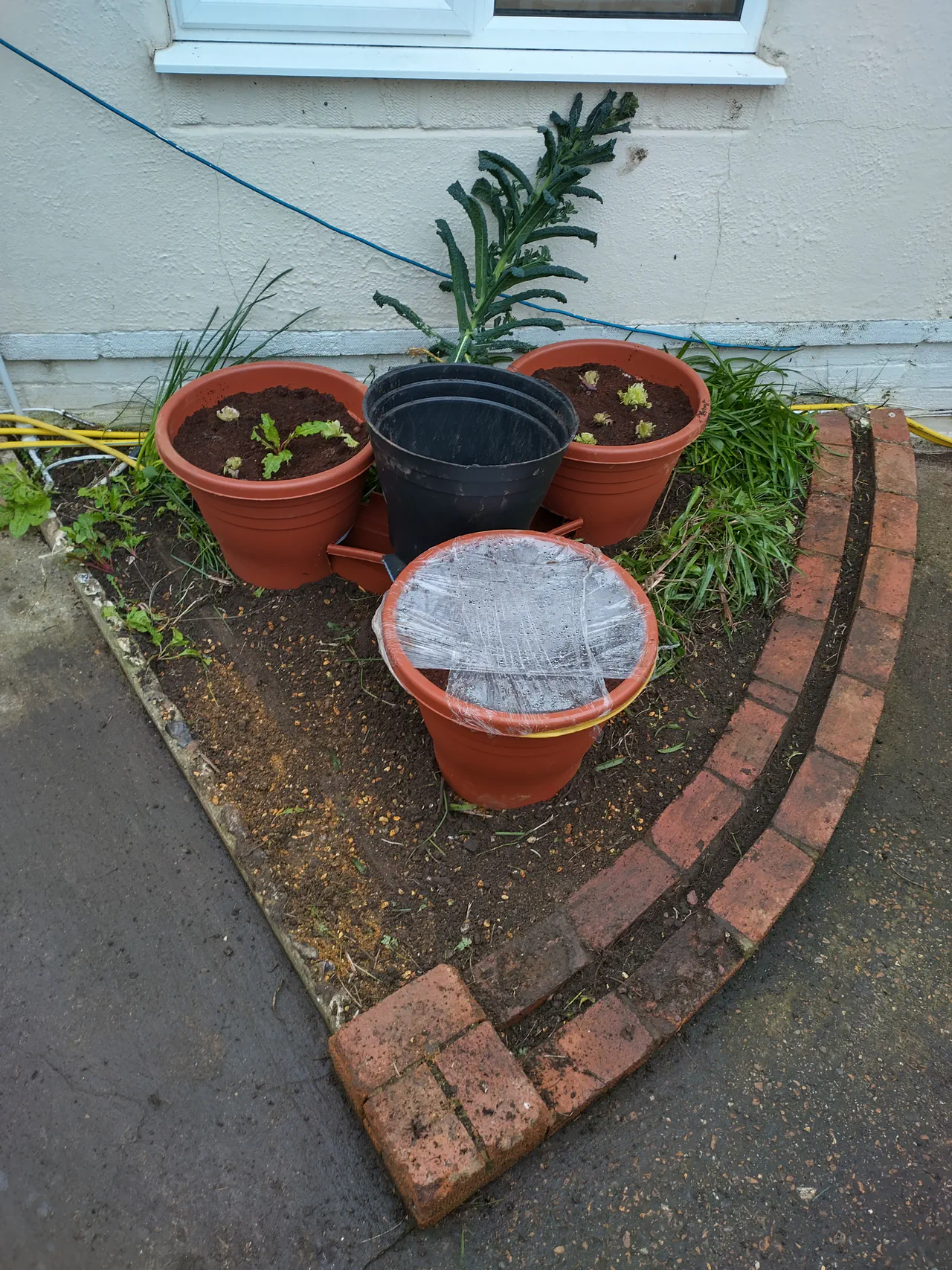
I built a £20 wicking planter. Then I built two more and arranged them in a triangle to fill a dead south-facing corner where nothing else quite fitted.
This is not a new system. It is three of the same system arranged to make use of an awkward space, plus a discovery during the build that added a fourth growing position for free. If you have not read the single planter guide yet, start there. This page assumes you know how they work.
The real story here is the lettuce. I planted supermarket root stumps into these planters and had lush, productive lettuce growing back within five weeks. That is the centrepiece of this guide.
The Triangle Layout
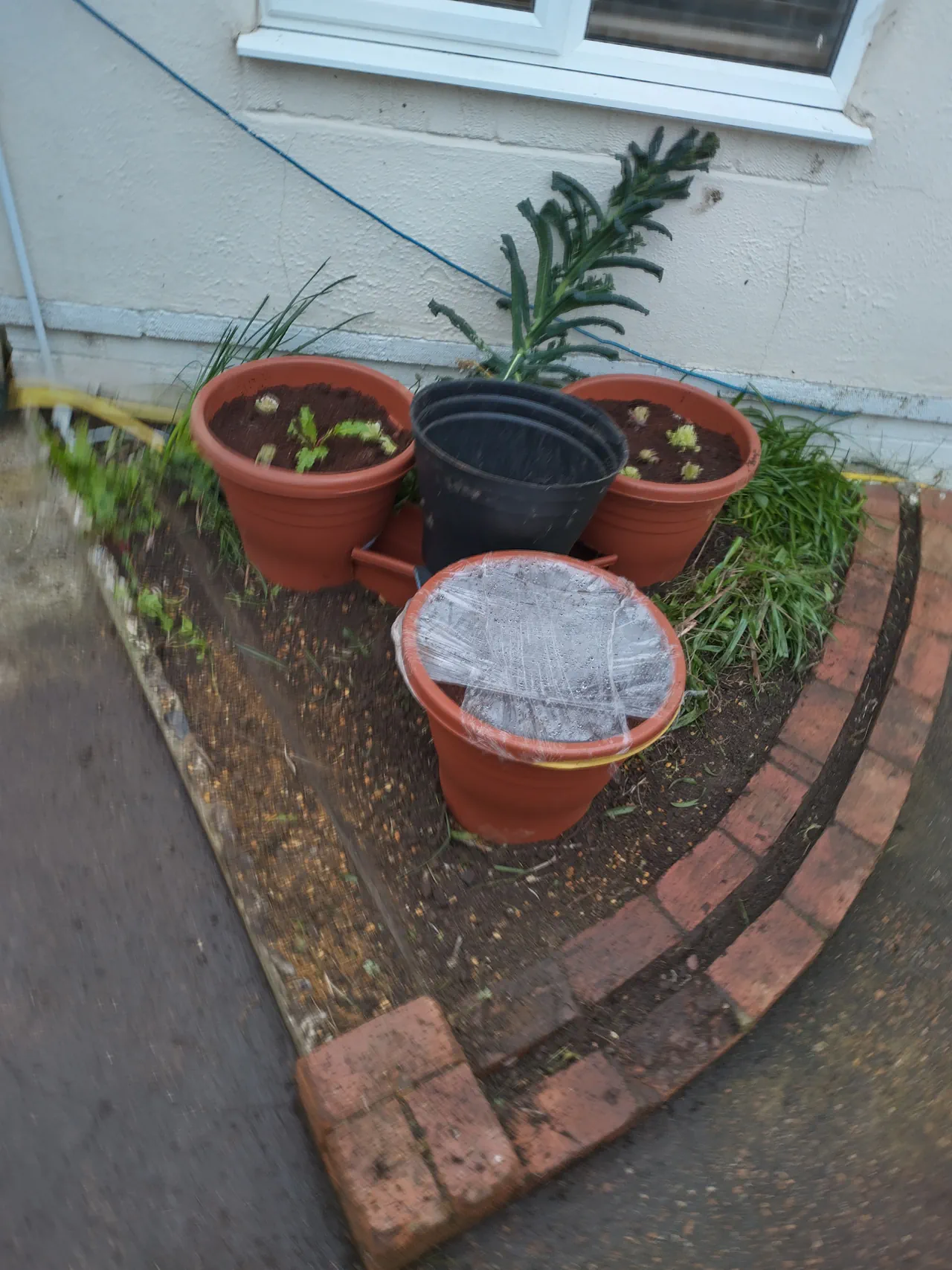
Three Tesco wicking planters, each with its own trough reservoir, arranged in a triangle with all troughs facing inward. They are not linked together. Each planter is completely independent with its own water supply. The troughs face inward partly to keep things tidy, and partly because the plan is to link them to a shared central reservoir in the future. For now, three separate reservoirs work perfectly well.
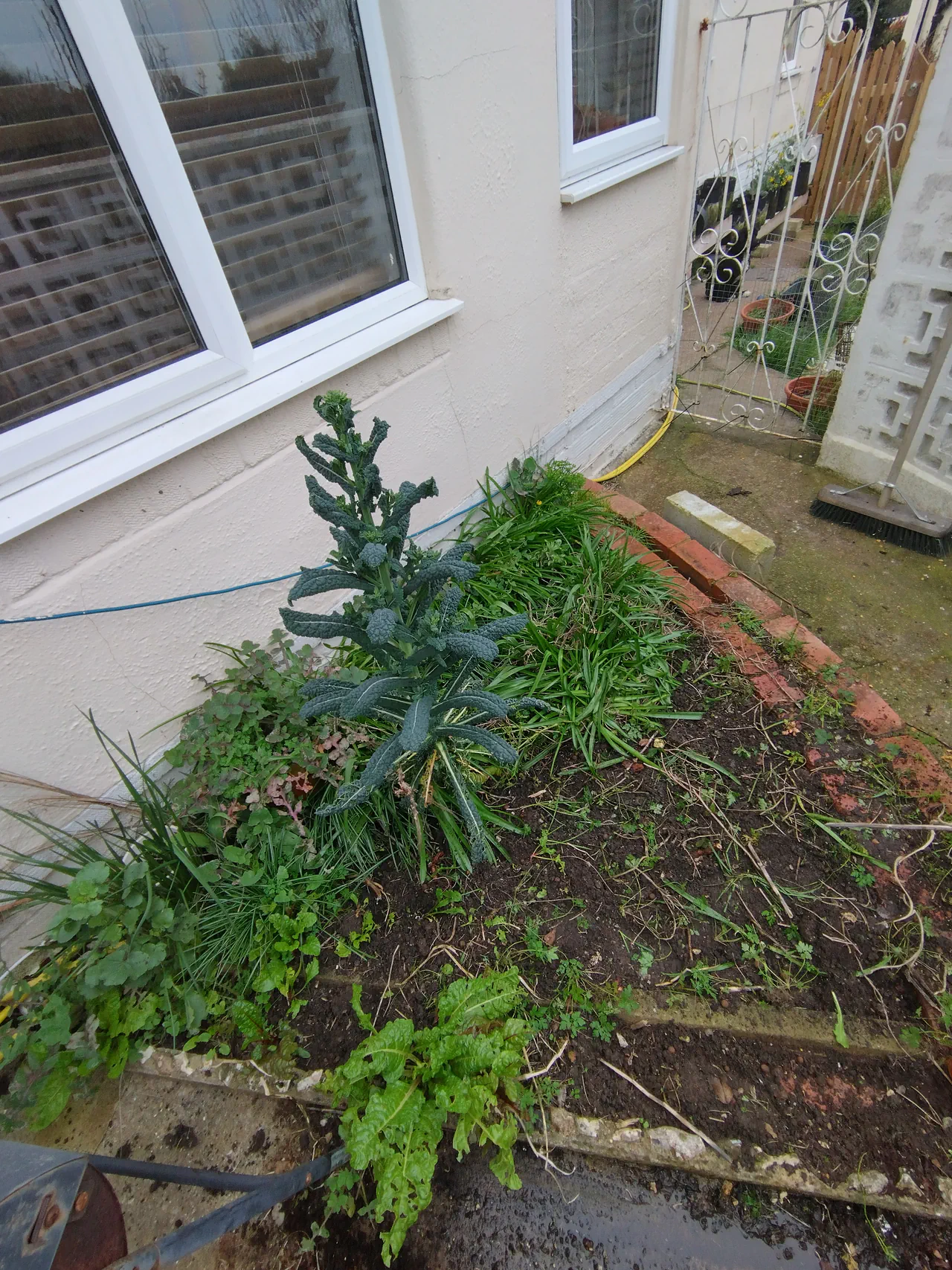
The whole thing fills an awkward south-facing corner between the house wall and the side path. About 80cm across at the widest point. Previously dead space with some self-seeded chard and a bolted kale plant. Now it grows food.
Site Preparation
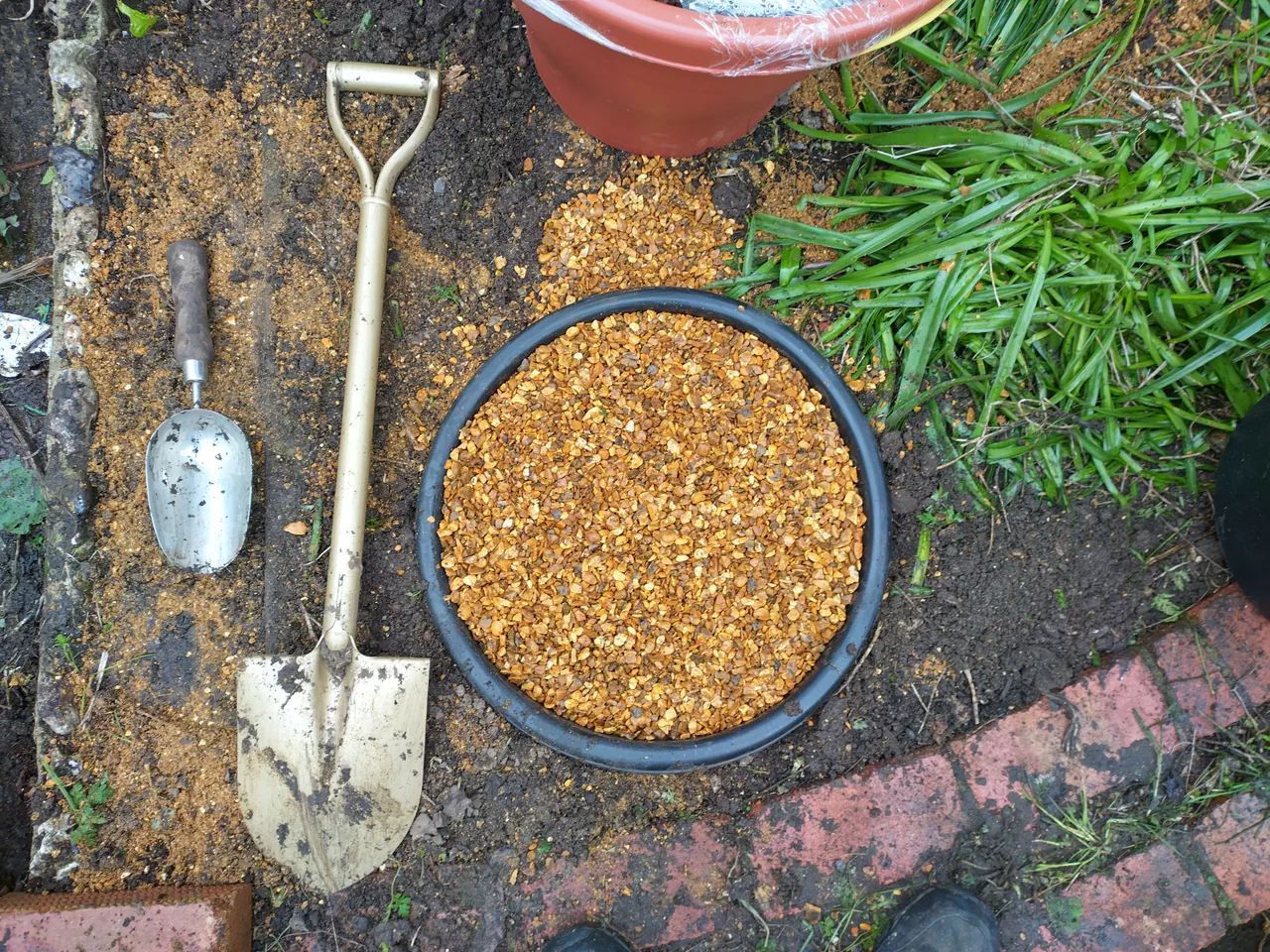
I dug out the triangular bed, cleared the weeds, and laid gravel to create level bases for each planter. The ground here slopes slightly, so level gravel pads were essential to stop the troughs draining to one end. Brick edging around the perimeter defines the bed and holds the gravel in place.
The Fourth Pot
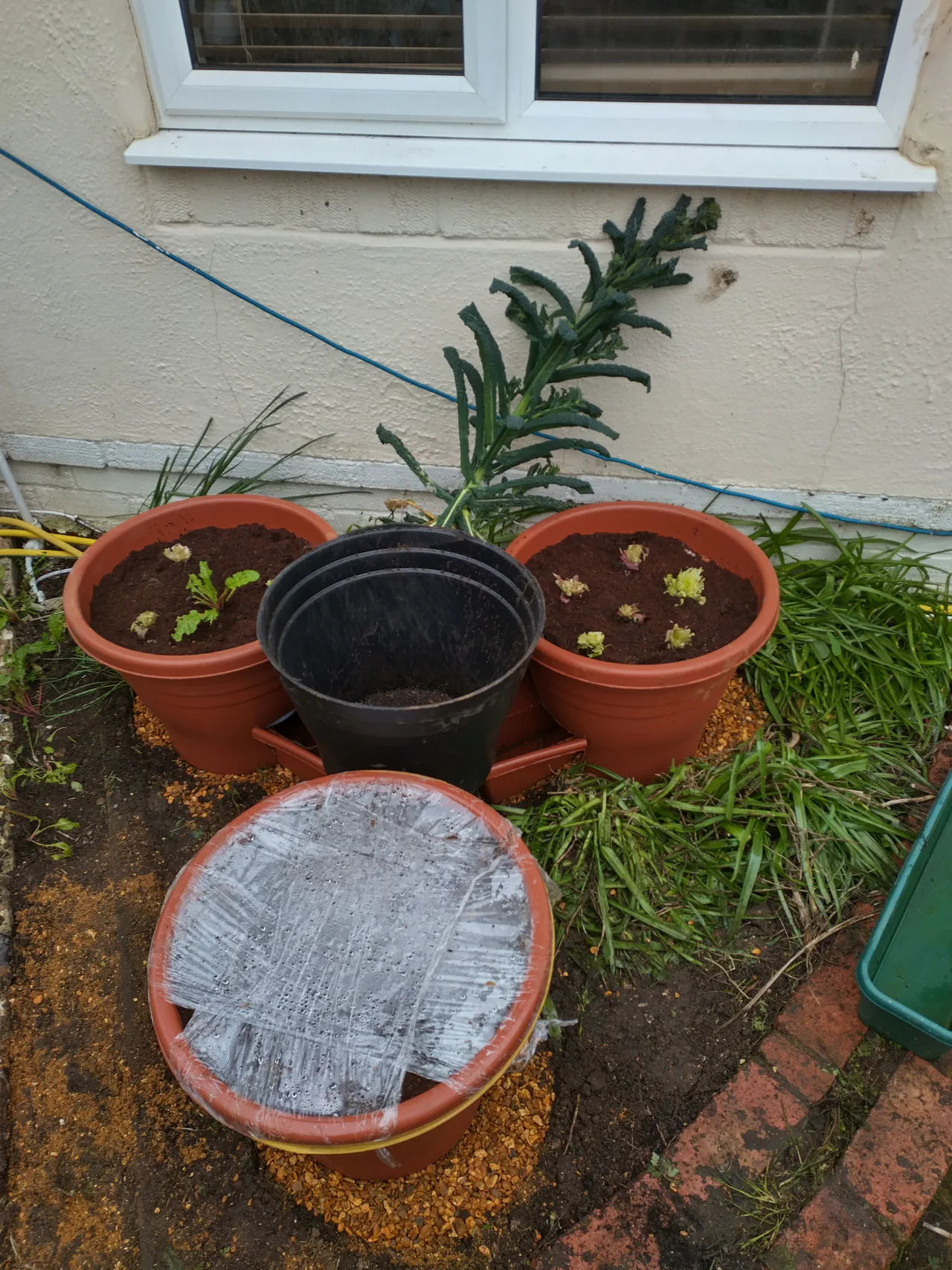
This was not planned. Once the three planters were in position, there was an obvious space in the centre where they all meet. A plain black pot fitted neatly on top of the three troughs.
I trimmed the top of this pot down so it would not tower over the terracotta planters around it. Then I used the cut rim as a template, flipping it onto the ground and drawing circles to mark where to place the gravel bases. A genuine aha moment from actually building the thing rather than planning on paper.
The centre pot has a wick going into each of the three independent reservoirs below. So it draws water from all three, and if one trough runs dry the other two keep it going. It is a surprisingly resilient arrangement for something that emerged by accident.
What It Cost
| Item | Cost |
|---|---|
| 3 x wicking planters (pot, trough, board, wicks, gravel, coir) | ~£60 |
| Centre pot (already had one) | £0 |
| Wicking rope for centre pot | ~£1 |
| Gravel for bases (leftover from other builds) | £0 |
| Bricks for edging (reclaimed) | £0 |
| Lidl living lettuce (2 packs) | ~£2 |
| Total | ~£63 |
Under £60 if you are building the three planters from scratch. The gravel bases, bricks, and centre pot were all things I already had. The lettuce cost about £1 a pack from Lidl.
The Lidl Lettuce Hack
This is the real story. I first described this technique in the NFT herb wall guide where it worked brilliantly in an active pumped system. The question was whether it would work just as well in a completely passive wicking planter with no pump and no moving water. It does.
The Technique
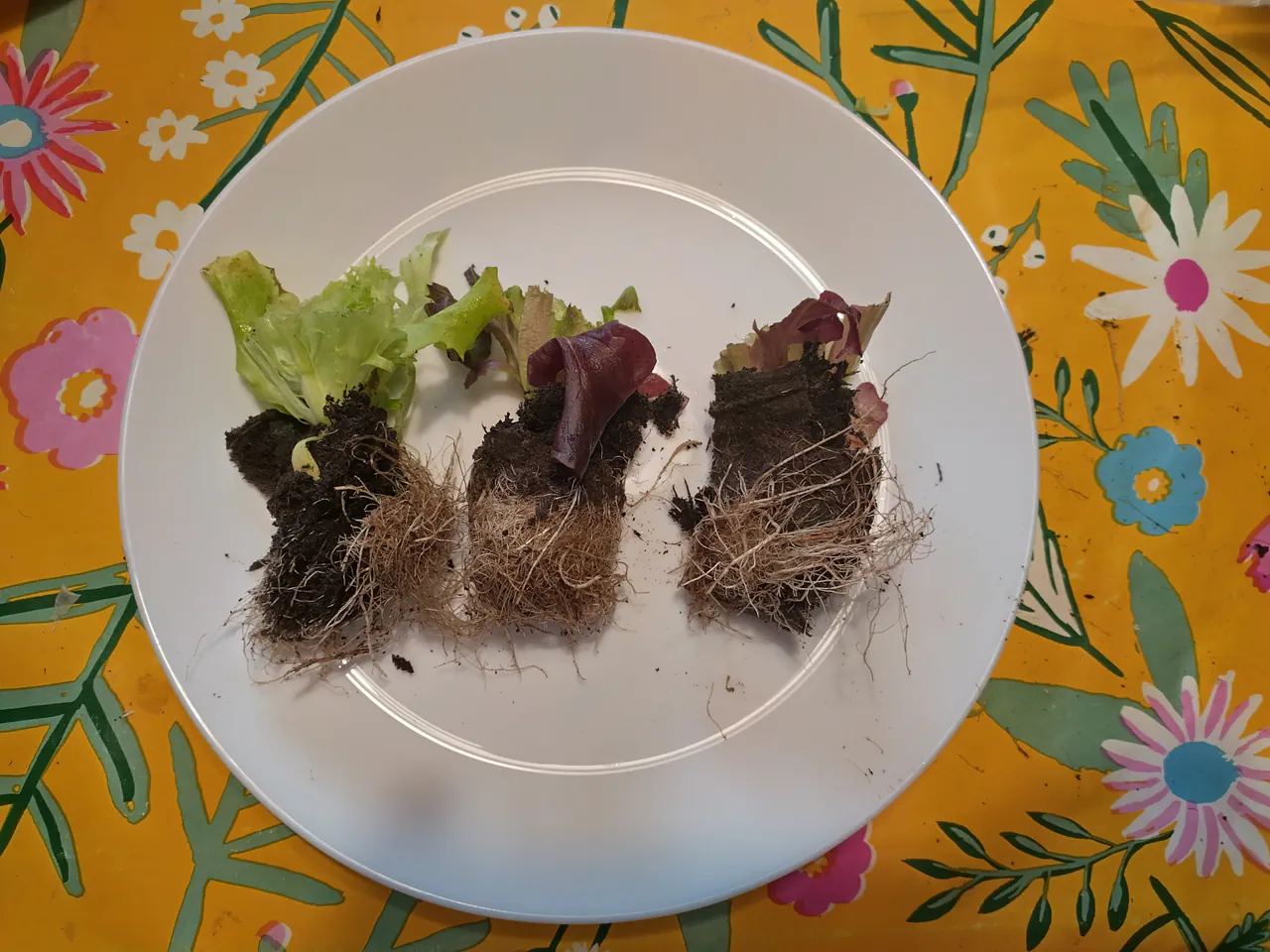
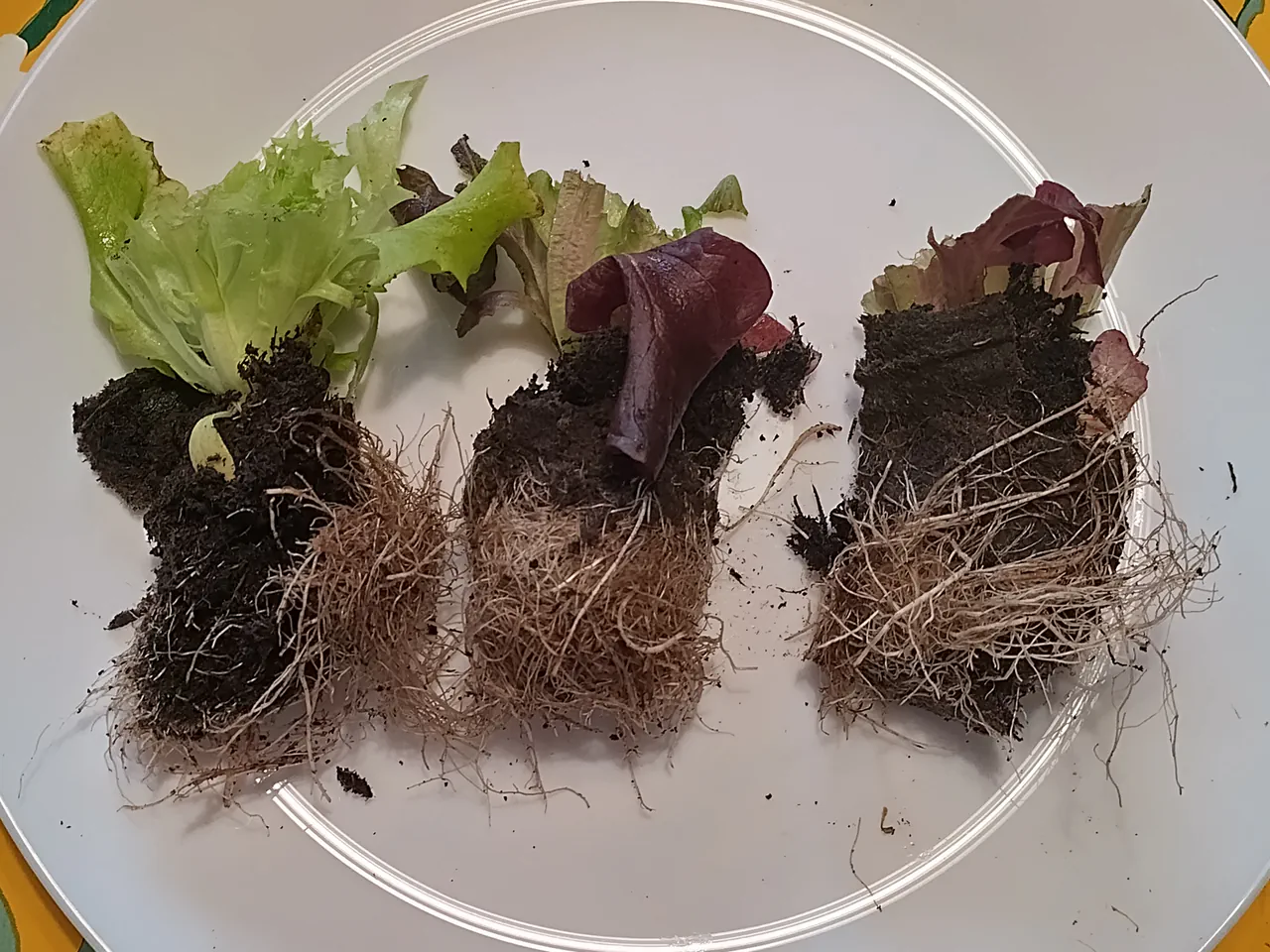
Lidl (and some other supermarkets) sell living lettuce with the root systems still attached. They have been grown commercially in hydroponics. Each pack is actually two or three individual plants sharing a root ball.
Buy them. Eat the lettuce. Then split the root stumps apart and plant them in the wicking planters. That is it. The constant moisture from the wicking reservoir does the rest.
Planting the Root Stumps
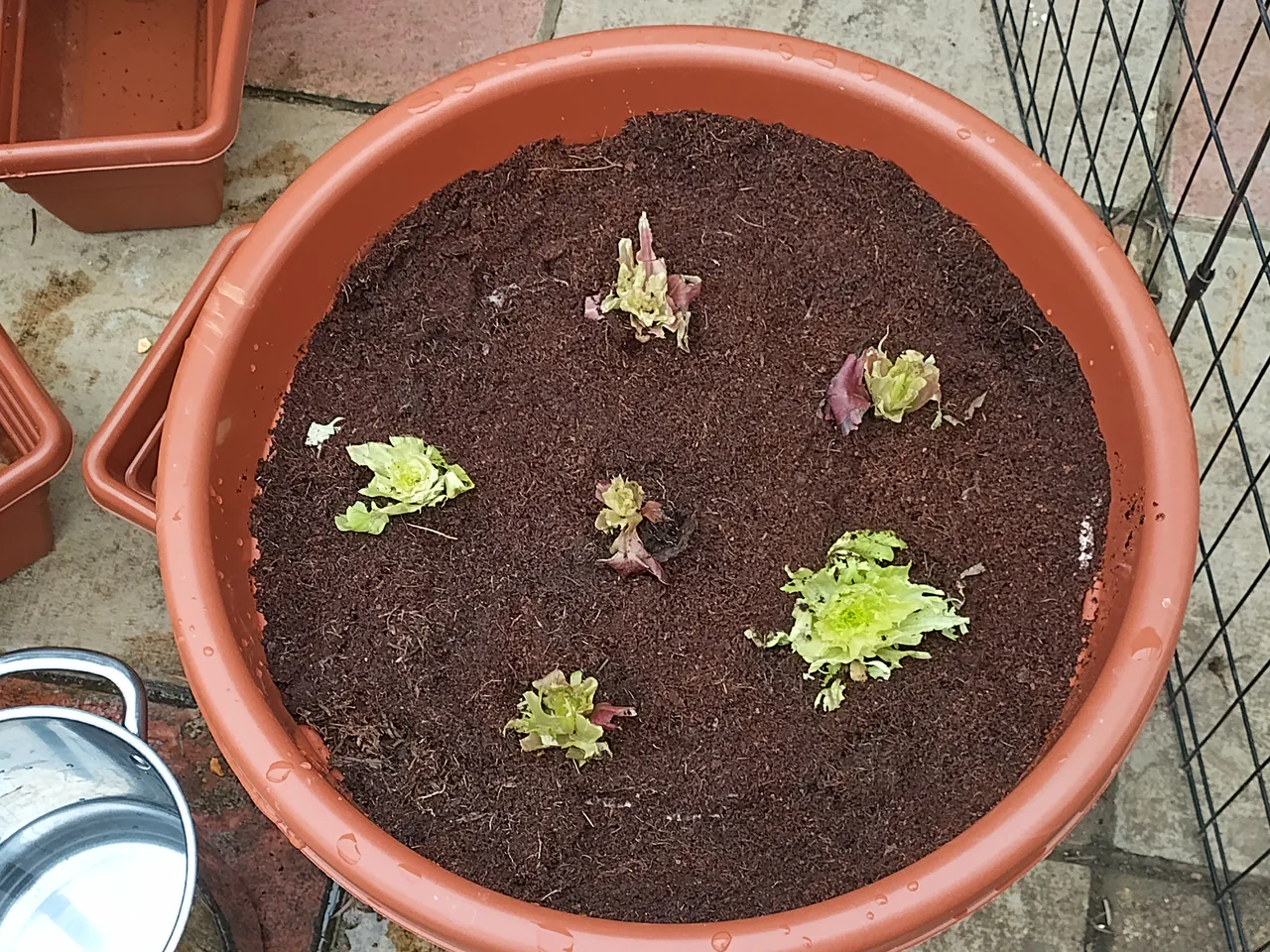
I spaced six root stumps per pot, pressing them gently into the coir with the growing point just above the surface. The wicking reservoir was filled, and the coir was already moist from the wicks doing their job. No further watering needed on planting day.
Five Weeks Later
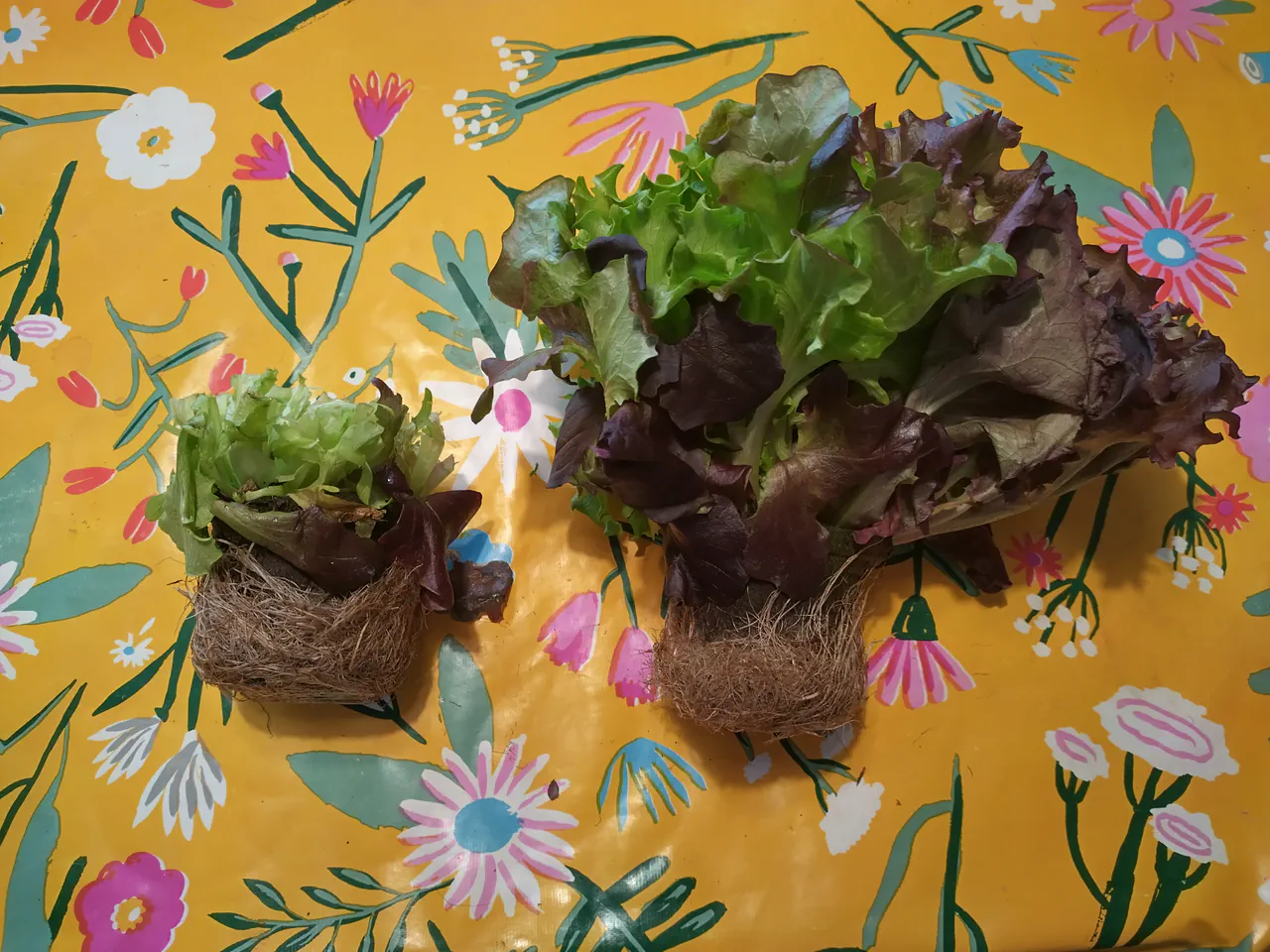
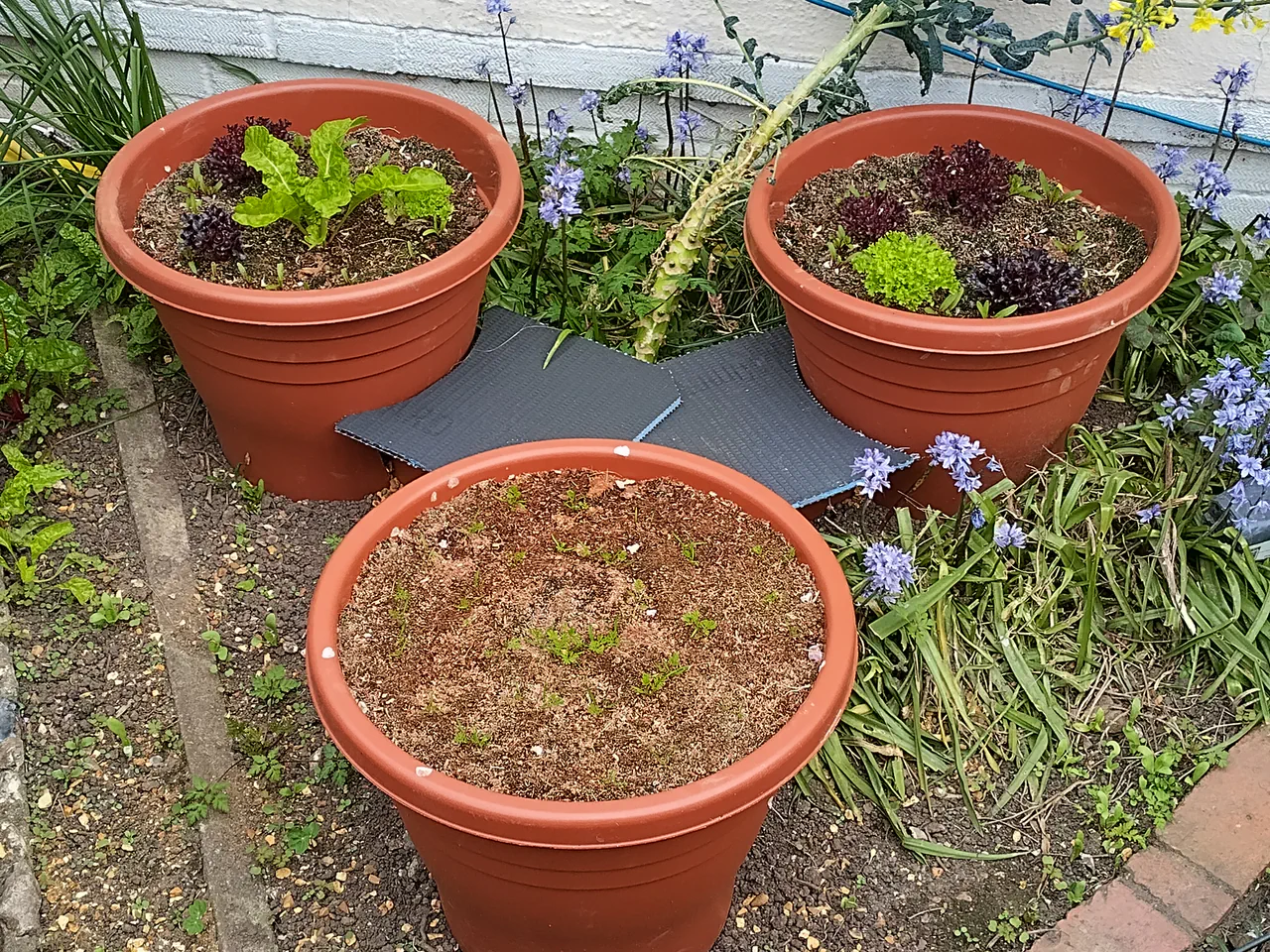
This is what those root stumps turned into. Five weeks of passive wicking with no intervention beyond topping up the trough every few days.
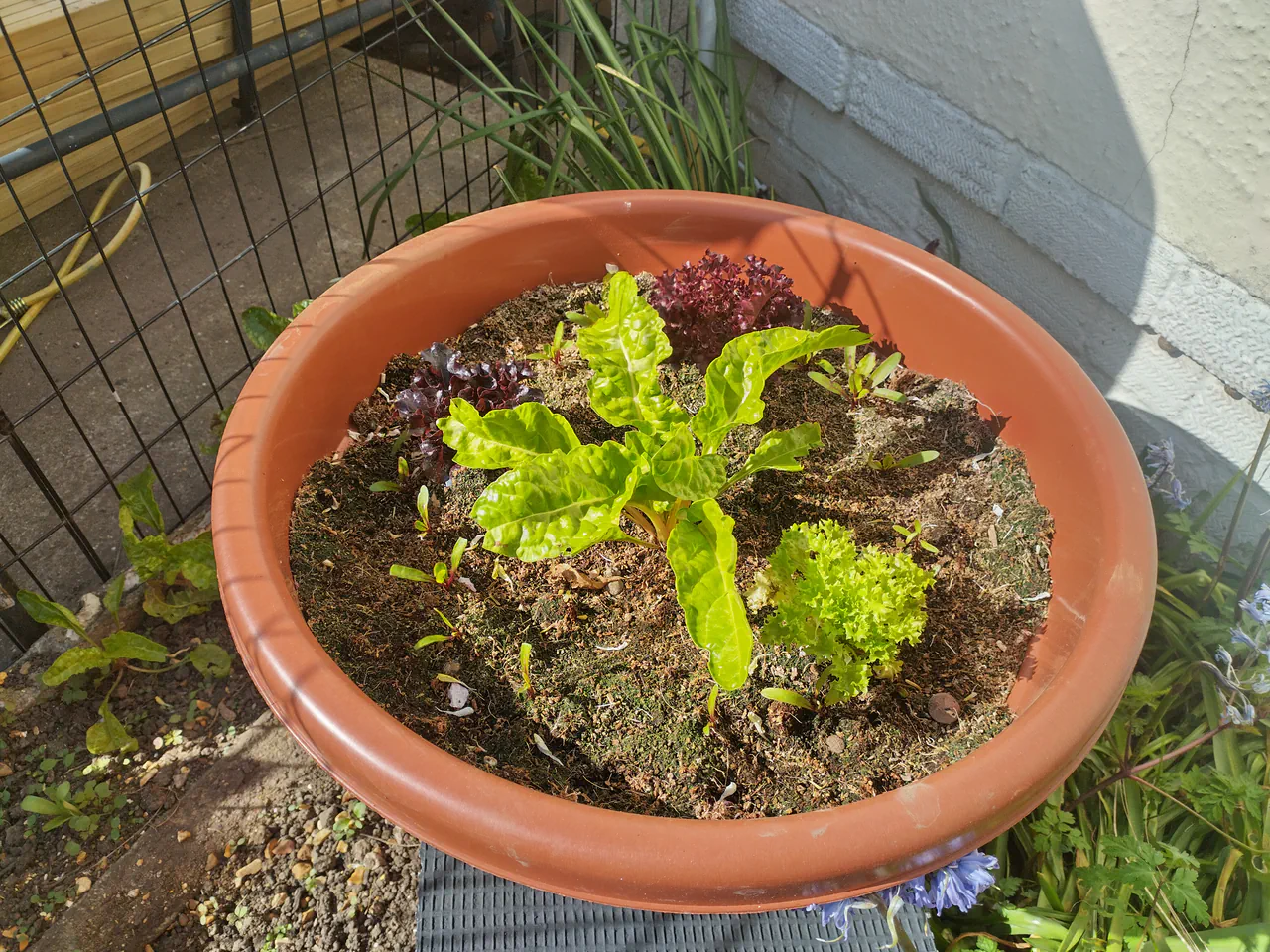
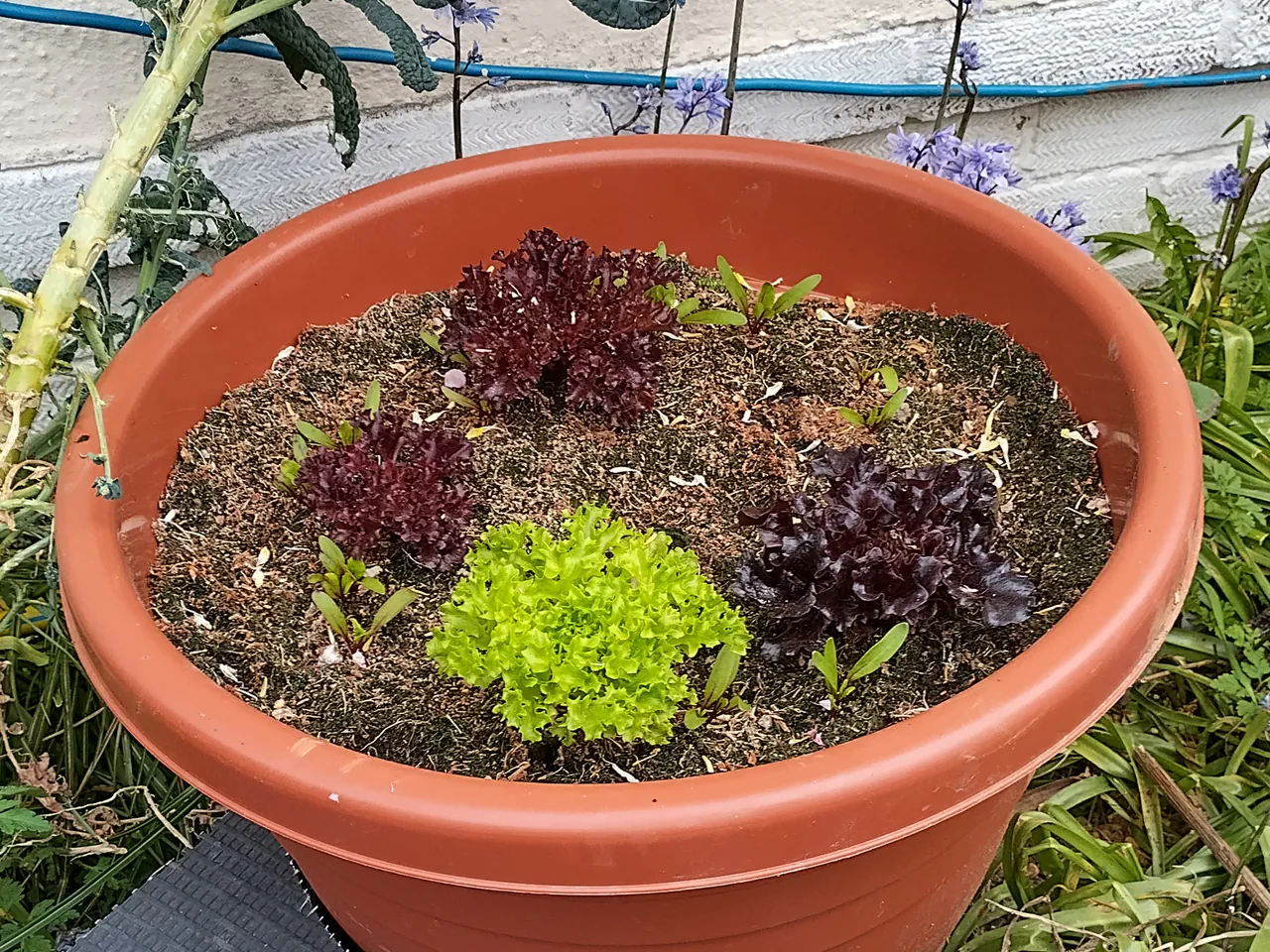
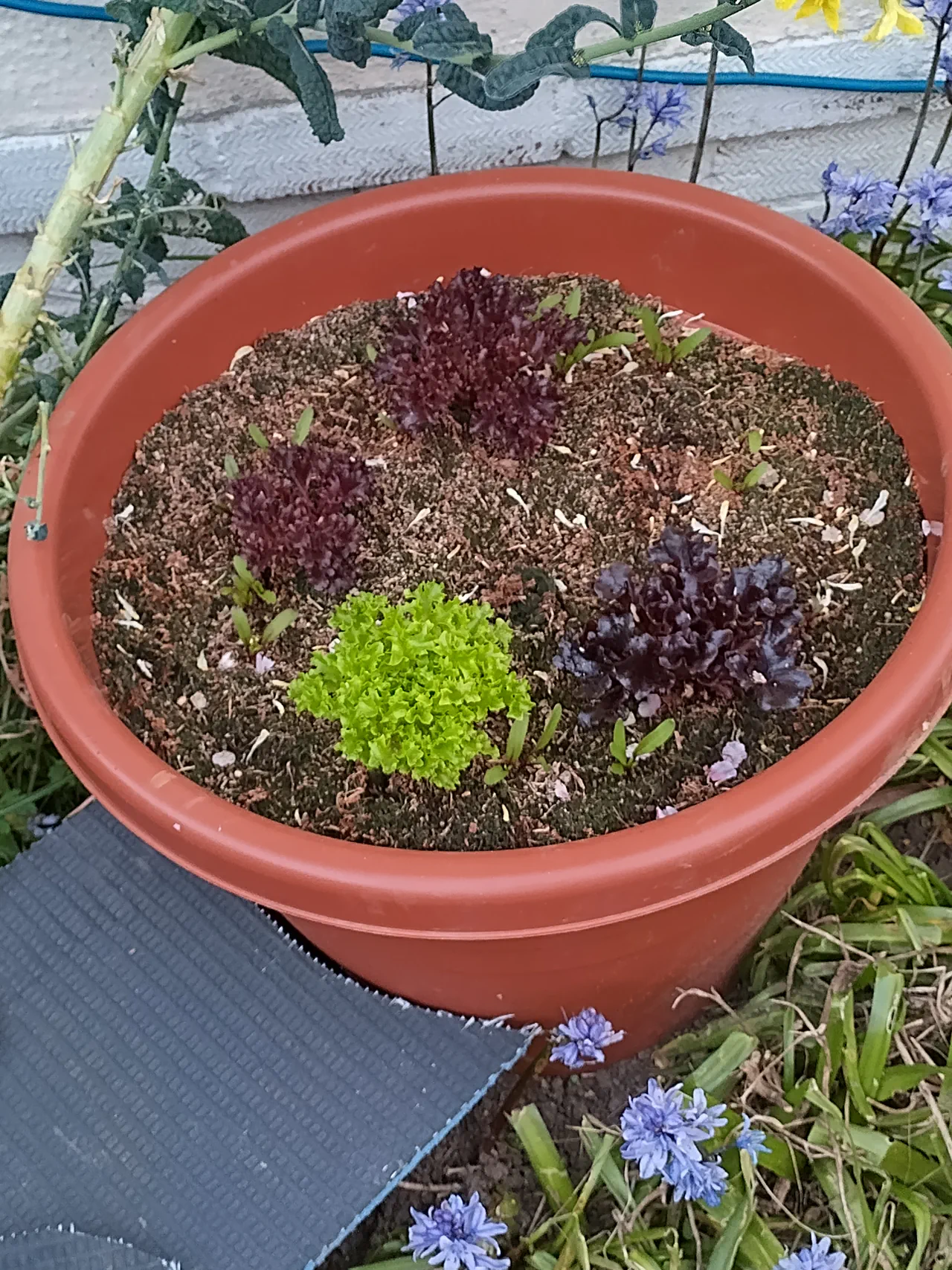
The lettuce grew back healthier and more vigorous than I expected. The passive wicking system keeps the coir consistently moist without waterlogging, which lettuce loves. No pump, no timer, no daily watering. Just physics and a trough full of water.
This confirms what I suspected from the NFT herb wall: the technique works across completely different systems. The NFT wall is active, pumped, and soil-free. These wicking planters are passive, coir-based, and have no moving parts at all. Same result. The roots just grow.
What Else is Growing
The lettuce is the headline, but there is more going on across the system.
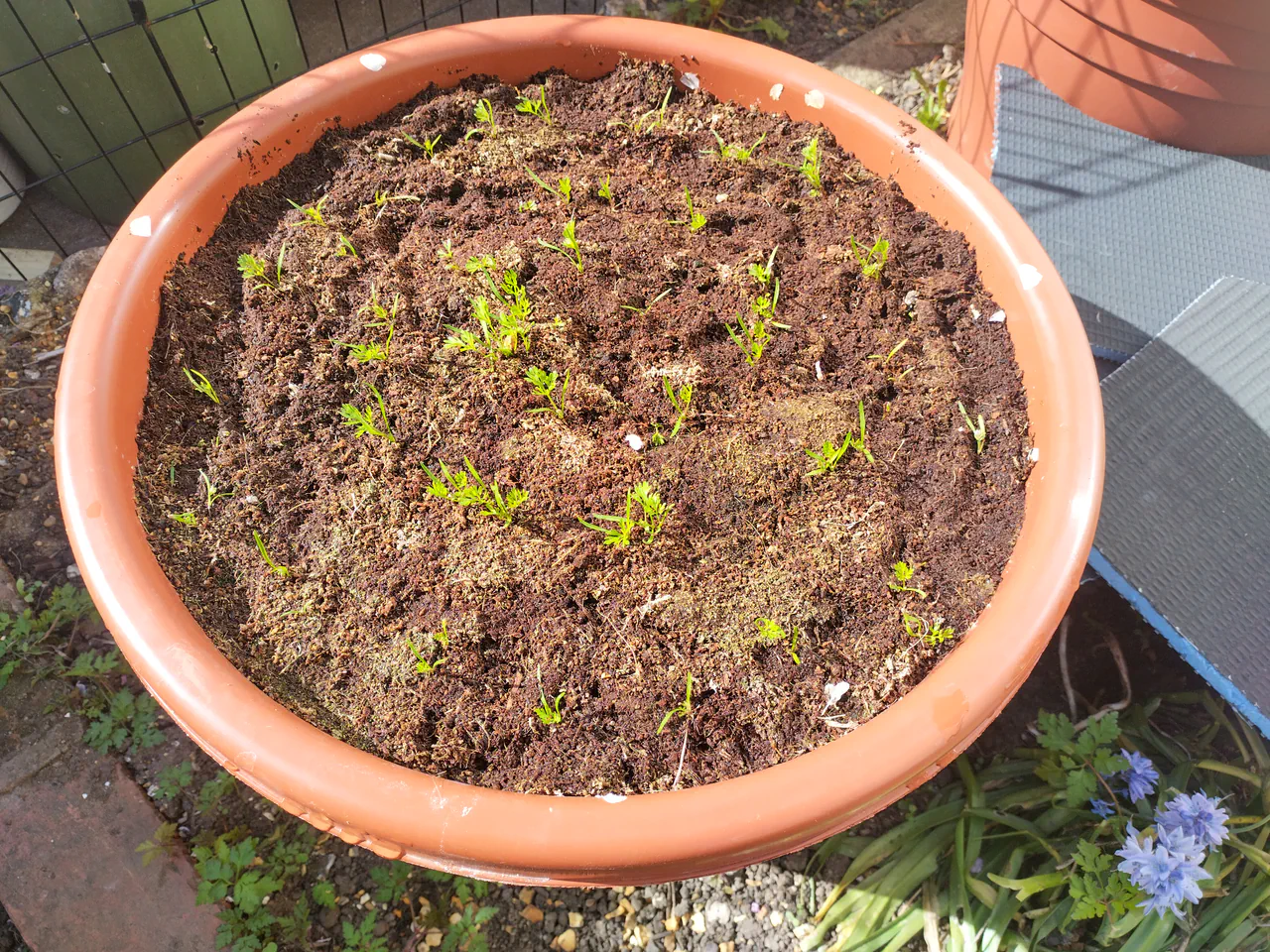
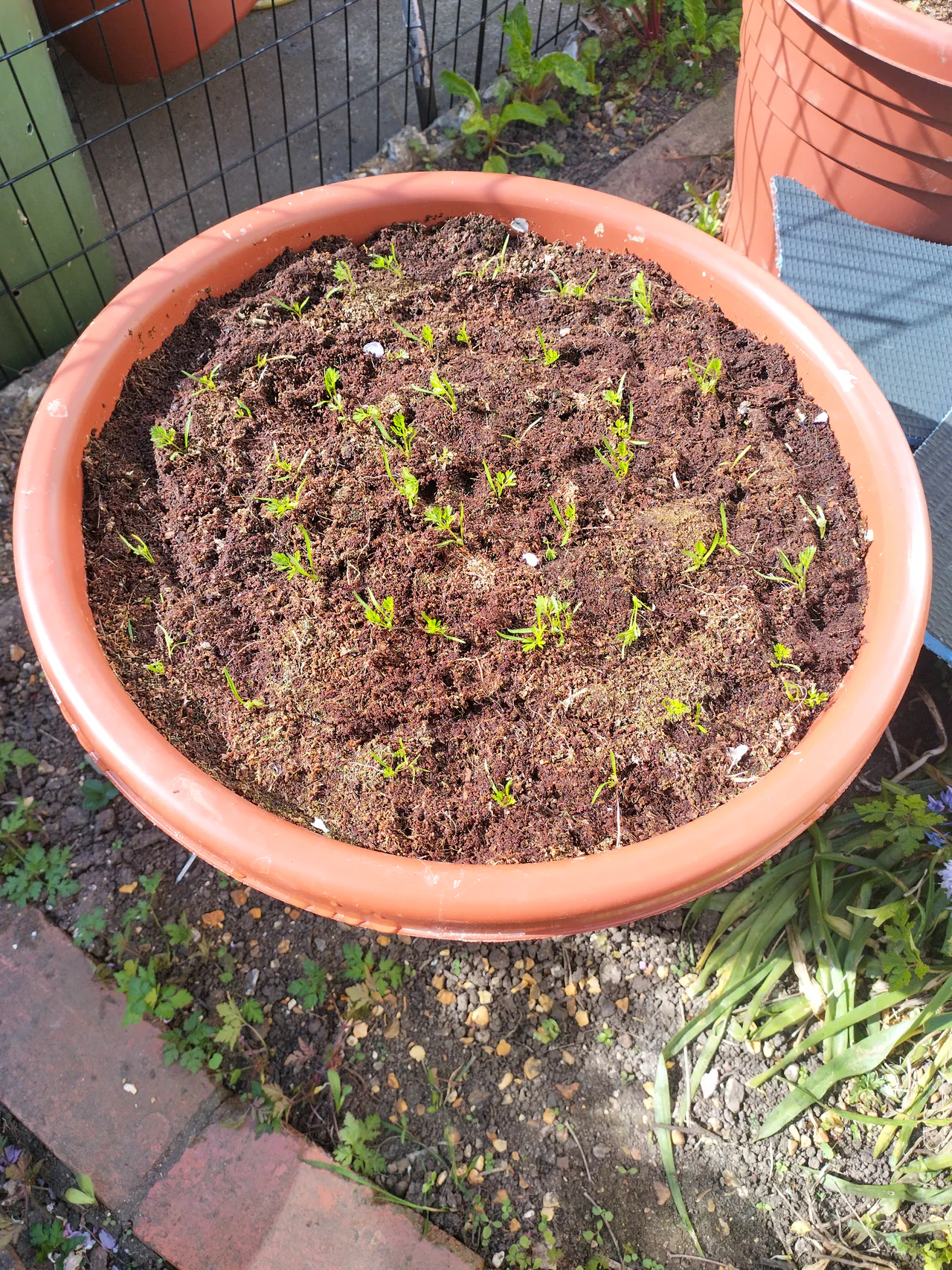
Carrots in the Original Planter
The original single wicking planter from the £20 build guide has rainbow carrot seedlings coming up. They are following the spiral sowing pattern from the original build and are establishing well. This planter sits at the front of the triangle arrangement, so all four positions are now producing.
Beetroot
Beetroot seeds are in as succession planting. Once the lettuce is harvested and the weather warms up, the beetroot will take over those positions. Having multiple planters means you can stagger your plantings rather than having everything ready at once.
Self-seeded Chard
While prepping the corner bed, I found self-seeded chard and perpetual spinach growing in the soil. Rather than composting them, I transplanted a few into the wicking planters and into the old tomato gutter grow system. Free plants from a bed that was about to be cleared anyway.
The Experimental Platform
Four identical growing positions. Same pot design, same coir, same wicking mechanism, same sun exposure. Change one variable and you have a controlled experiment.
Same crop, different nutrient concentrations. Same variety, different EC levels. Same conditions, two different lettuce cultivars. The possibilities are obvious, and at under £20 per unit the cost of adding a control group is trivial. Detail comes in future experiment posts.
What I'd Do Differently
- Level the gravel more carefully. One of the troughs drains slightly to one end because the gravel base was not perfectly flat. It still works, but the reservoir capacity is reduced. Five extra minutes with a spirit level would have fixed it.
- Trim the centre pot before positioning. I trimmed it in place, which was fiddly. Easier to measure, cut, and then place it.
- Plant more root stumps per pot. Six per pot worked, but there was room for eight. The lettuce fills out regardless, and more plants means a faster visual impact and more variety in the harvest.
What's Next
- Harvest and rotate: The lettuce will be picked and replaced with beetroot as the season progresses. The wicking planters make rotation simple because each pot is independent.
- Carrots in the original planter: The rainbow carrots are establishing well and will be the next big result. Root vegetables in a wicking planter are the real test of the system.
- A/B experiments: With four identical positions, proper controlled experiments are planned for later in the season. Same crop, one variable changed.
- Linked reservoir: Eventually, connecting the three troughs to a shared central reservoir with one fill point. For now, three separate fills every few days is manageable.
Watch the harvest
The lettuce is about to be picked, the carrots are establishing, and the A/B experiments are being planned. The Glut is where I share results, harvest data, and what I cook with it all.
Free newsletter. No spam, ever.
Frequently Asked Questions
How do you regrow lettuce from supermarket scraps?
Buy living lettuce with roots still attached (Lidl sells these regularly). Eat the leaves, then plant the root stump in moist growing medium. In a wicking planter, the constant moisture supply means you barely need to think about watering. Expect harvestable leaves again within 4 to 5 weeks.
Can you arrange wicking planters to fit awkward spaces?
Yes. Because each planter is independent and self-contained, you can arrange them in any configuration that fits. Three in a triangle fills a corner. Two in a line fills a narrow strip. The troughs face inward to keep things tidy, and each unit waters itself from its own reservoir.
What is the cheapest hydroponic system to build?
A single Tesco wicking planter costs under £20. Three of them arranged as a triangle system costs under £60 and gives you four growing positions. No electricity, no pump, no specialist tools.
Can you grow vegetables in a small garden corner?
A south-facing corner is ideal. This triangle system fills a space roughly 80cm across with four independent planters, each producing salad leaves, root vegetables, or herbs. The wicking reservoirs mean each pot only needs topping up every few days.
Related growing guides
Related Content
Build a £20 Wicking Planter from Tesco
The single planter that started this system. Start here if you have not built one yet
Gutter NFT Herb Wall
The active system where the Lidl lettuce hack was first tested
IBC Gravel Bed Hydroponic System
Another passive system using wicking principles at a larger scale
All Growing Guides
Browse all guides by method, difficulty, and season